

 Facebook
 X
X
 Pinterest
 Copy Link
So my neighbor Frank – you know the type, always bragging about his investments at every barbecue – he corners me last April while I’m trying to grab a burger. Says he just dropped serious cash on some warehouse deal. I’m thinking “here we go again with Frank’s schemes.”
But man was I wrong about this one.
Industrial Real Estate Stopped Being Boring (Who Knew?)
Frank drives me out there on a Saturday. I’m hungover. It’s hot. We’re going like 40 miles outside town to look at what he keeps calling his “game changer.” Already regretting saying yes to this.
We pull up and honestly? Looks like every other big warehouse you’ve ever driven past without thinking about. Metal siding. Loading docks. Parking lot with some cracks in it.
Then we walk inside.
First thing that hits me – and I swear this is true – the floor looked wet. Just super shiny and smooth. I actually asked Frank if they just mopped or something. He laughed so hard he snorted.
“It’s polished concrete, genius. Cost me extra but watch…”
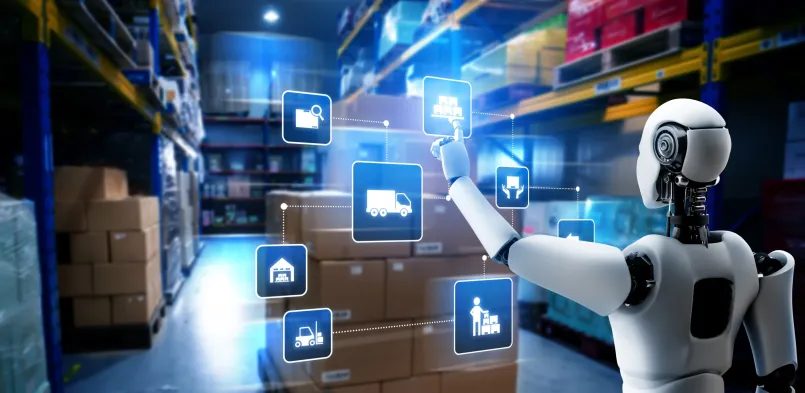
This little robot thing rolls by. Maybe comes up to my knee. Carrying boxes stacked neat on top. Doesn’t make hardly any noise. Just glides past like it’s been doing this route a million times.
“Where’s the guy driving it?” I’m looking around for a remote control or whatever.
Frank grins. “There is no guy.”
That’s when it clicked for me that industrial real estate isn’t what I remembered from that summer job I had in college. Back then it was just forklifts everywhere, pallets stacked messy, guys yelling over the noise. This? This was something else entirely.
The smell got me too. Instead of that musty warehouse smell – you know, like old cardboard mixed with oil and dirt – it smelled almost sterile. Clean. Like the Apple store or something. Weird comparison but that’s what popped in my head.
Frank’s been in real estate since before I met him (like 12 years ago?) and even he says he barely recognizes the business anymore.
AI Logistics Is Why Frank’s Making Bank Now
Okay so here’s where it gets weird.
Frank shows me this dashboard on his phone. It’s tracking everything happening in the building. And I mean EVERYTHING. How many packages in section D. Temperature in the refrigerated area. Even which route the delivery trucks are taking to get there.
“The system knows what’s coming before the drivers do,” Frank tells me. He’s dead serious.
I touch one of the metal shelving units. Cold. Solid. But the whole thing can move by itself when the AI logistics system tells it to. They rearrange the layout based on what’s selling fast that week.
My brain couldn’t quite wrap around it at first. A building that reorganizes itself? Come on.
But Frank pulls up these numbers. His property value went up 35% since January. January! It’s only September. Meanwhile my 401k is doing basically nothing except stressing me out.
The old warehouses Frank used to own? Total opposite experience. You’d walk in and immediately hear backup beepers, engines running, people shouting across the floor. Smelled like diesel and sweat. Loud enough you’d leave with a headache.
This new place? Four people working the whole shift. Sitting at computers. The loudest sound was somebody’s keyboard clicking and some soft beeping from the monitors.
AI logistics runs most of it. The system predicts problems before they happen. Frank said last week it flagged a potential delay from a supplier in Michigan because of weather patterns. Rerouted everything automatically. He didn’t even know about it till the next day.
“It’s like having the world’s most paranoid assistant,” he said, “except it’s always right.”
Where Smart People Buy Industrial Real Estate These Days
Location used to be the only thing that mattered. Close to highways. Close to cities. That was the rule.
Frank’s warehouse is 40 minutes outside the metro area. Used to be that would’ve killed the deal. Shipping costs too high. Drivers complaining about the commute.
Not anymore.
The AI logistics setup runs so smooth that his facility competes with places right downtown. Actually beats some of them because he’s got better internet (county put in new fiber lines out there) and way cheaper electricity.
My cousin Jen works commercial real estate over in the city. She told me at Thanksgiving – after a few glasses of wine – that she doesn’t even understand half the questions clients ask anymore.
“They want to know about server capacity. Integration with autonomous vehicles. I used to just need to know about loading docks!” She was laughing but you could tell it stressed her out.
The warehouses making real money now need three things Frank explained:
Space to expand. Can’t be landlocked. These operations grow fast when they’re running on smart systems and you need room.
Heavy duty power. Not regular electrical. The serious commercial stuff. All the robots and climate control and computer systems running 24/7 eat through electricity like you wouldn’t believe. Frank’s power bill makes my eyes water.
Fast internet that doesn’t crap out. The whole AI logistics thing depends on constant data flowing back and forth. Can’t have it going down every time there’s a storm.
I went with Frank to check out another property few weeks back. The control room had three people in it. One lady was literally watching YouTube videos because the system had everything running perfectly. She just had to be there in case something went wrong.
Never went wrong the whole time we were there.
What Changed For People Investing in Industrial Real Estate
My buddy Steve’s been investing in commercial properties for his retirement fund. Traditional guy. Likes things simple and predictable.
He called me last month asking about Frank’s warehouse setup. Steve never asks anybody for advice so that surprised me.
“I don’t get it,” Steve said. “These young investors are paying premium prices for warehouses in the middle of nowhere. Makes no sense.”
I tried explaining the AI logistics angle but honestly I probably butchered it. Told him to just go see Frank’s place himself.
He did. Called me three days later.
“I’m an idiot. This is the future and I’m still stuck in 2015.”
That’s the thing. Industrial real estate isn’t about buying a building anymore. You’re buying technology that happens to live in a building. The concrete and metal? That’s almost secondary now.
Frank’s system updates itself automatically. Downloads improvements. His warehouse is literally smarter this month than last month. Show me a regular building that does that.
The investors who get it are printing money. The ones who don’t? They’re gonna wake up in five years wondering what happened.
Nobody Saw This Part Coming
You’d think robots doing all the work means less jobs right?
Wrong.
Frank hired four new people since June. Except they’re not warehouse workers like before. He’s got a guy who used to work at Google. Another one came from some robotics company in California. They make good money too – way more than the forklift operators he used to employ.
The work changed completely. Instead of moving boxes around, people are monitoring systems. Fixing software glitches. Optimizing routes. One guy’s whole job is making sure the AI logistics platform talks nice with their clients’ ordering systems.
The building even smells different now. Less exhaust fumes and motor oil. More like an office building. That electronics smell when computers have been running all day – sort of warm and clean at the same time. Hard to explain if you’ve never noticed it.
Everything feels different. Calmer. More controlled. Less chaos and yelling, more quiet efficiency.
Frank’s dad ran a warehouse back in the 80s. Frank showed him the new place last summer. His dad just stood there shaking his head, said he didn’t recognize the business anymore.
What Happens Next
Frank thinks we’ve got maybe five years before traditional warehouses are basically extinct.
I used to think he exaggerated everything (still do about most things) but on this? He might be right.
Industrial real estate keeps changing faster than anyone expected. Every time I talk to Frank there’s something new. Some upgrade. Some efficiency improvement that seemed impossible six months ago.
The properties that can’t adapt? They’re dead. Maybe not today or tomorrow but soon. The market doesn’t care about your feelings or how things used to work.
Winners will be the ones who accept change instead of fighting it. Who see technology as a partner not a threat. Who understand that AI logistics isn’t replacing humans – it’s making humans more valuable by letting them do harder, more interesting work.
Look Here’s the Bottom Line
Six months ago I thought Frank was crazy for this warehouse investment.
Last week I put in an offer on a similar property two counties over. Lost my mind? Maybe. But the numbers don’t lie and Frank’s numbers look really really good.
Industrial real estate woke up and got interesting when nobody was paying attention. These buildings think now. Improve themselves. Make their owners wealthy in the process.
Most people still picture old warehouses when they hear “industrial property.” Dusty. Boring. Just sits there collecting rent.
They’re missing everything. The revolution happened already. Walk into a facility running modern AI logistics and you feel it immediately. The energy’s different. Everything’s humming along efficiently. Future’s already here, just not evenly distributed yet.
For investors willing to learn new tricks? Opportunities everywhere. For stubborn people stuck in the past? Good luck with that.
Me? I’m meeting my bank next Thursday about financing. Frank’s giving me advice. Never thought I’d be the warehouse guy but here we are.
Life’s weird sometimes.


